NP-Fetterman Study Manager Study
An empowerment evaluation of the new Study Manager Training curriculum in an emerging AI environment.
Donna Benson (lead) · Chad Collyer · Anne Hughes
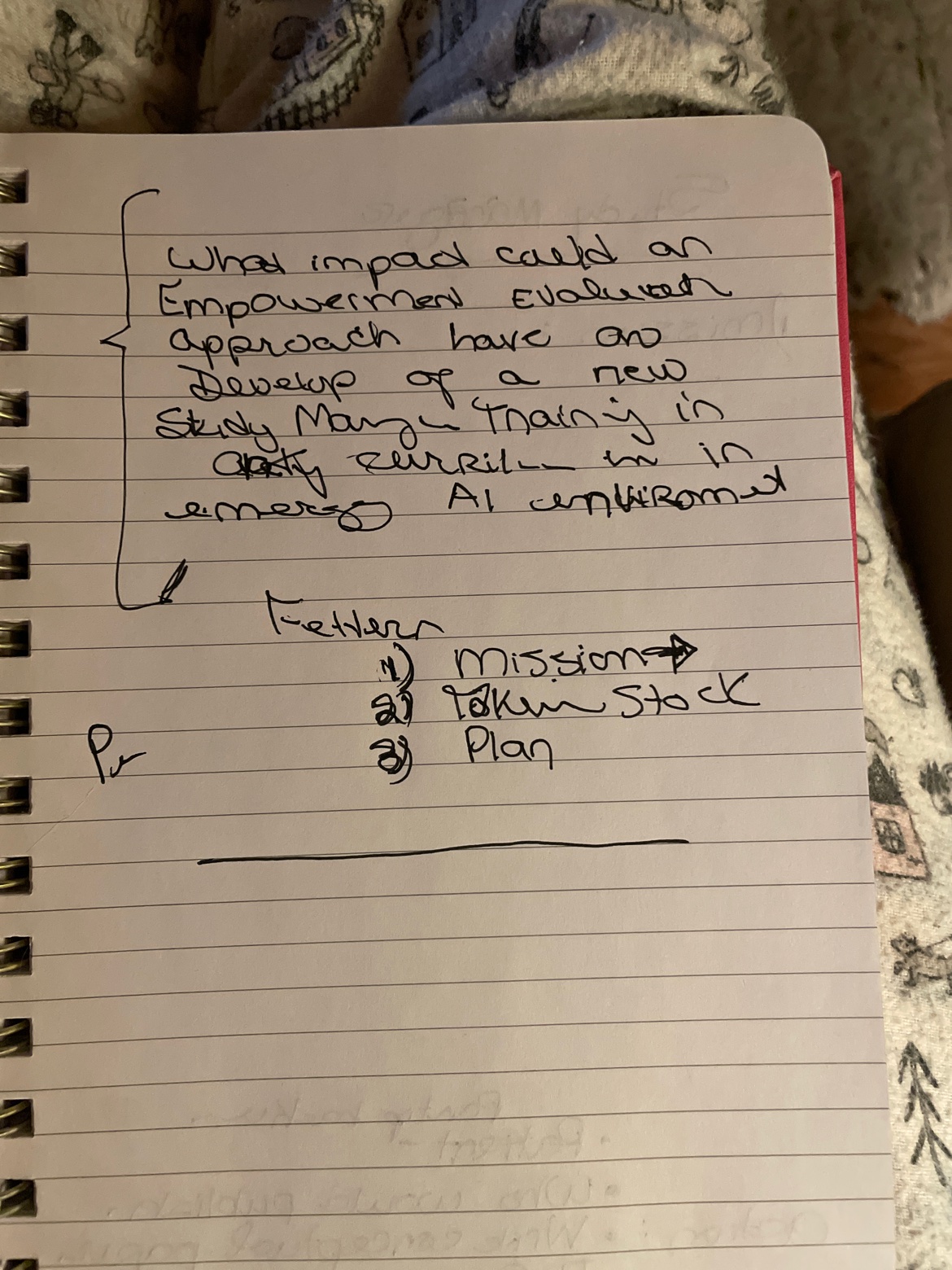
Research question: What impact could an Empowerment Evaluation approach have on development of a new Study Manager Training quality curriculum in an emerging AI environment?
The baseline — Taking Stock, Nov 17, 2026
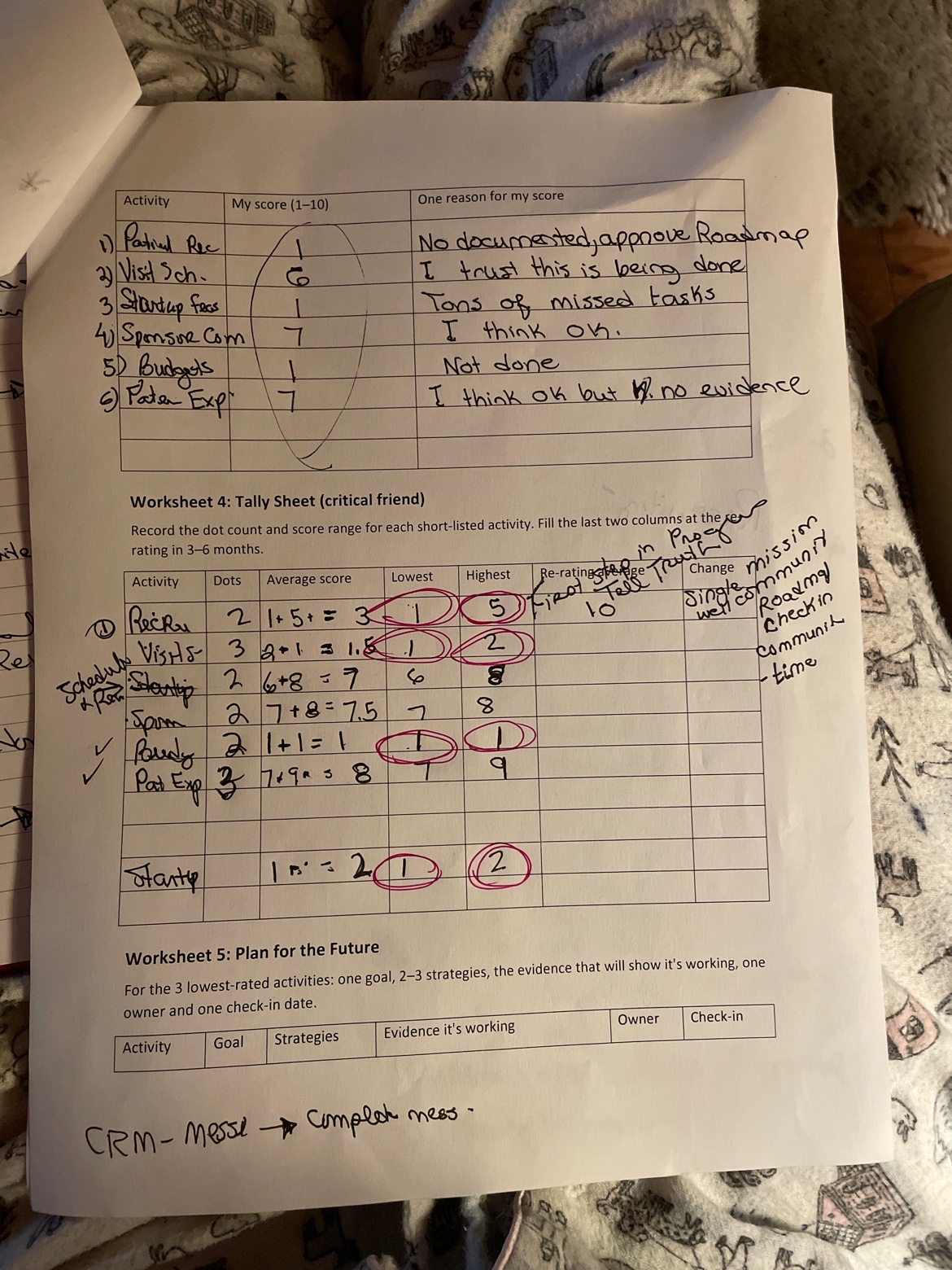
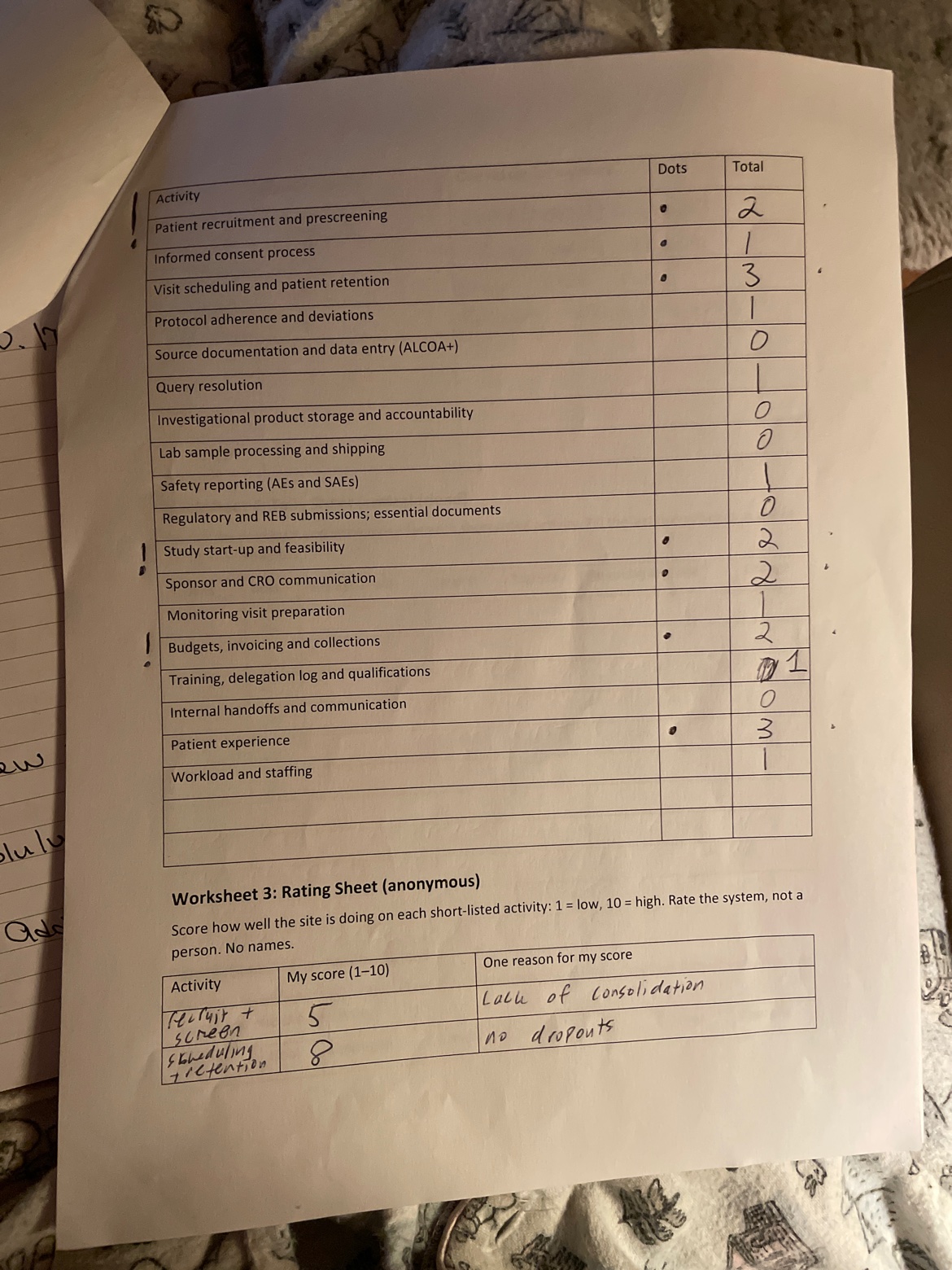
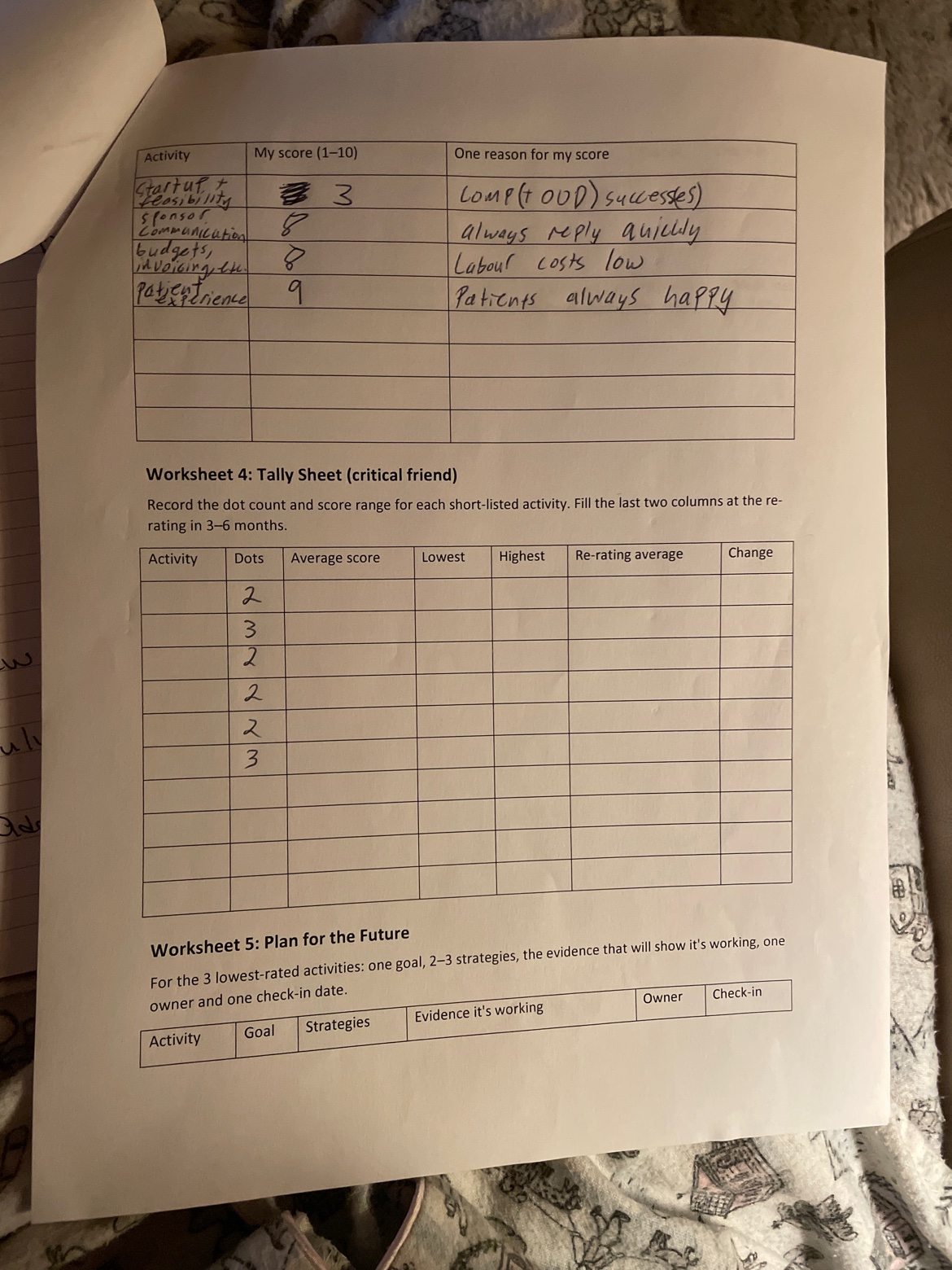
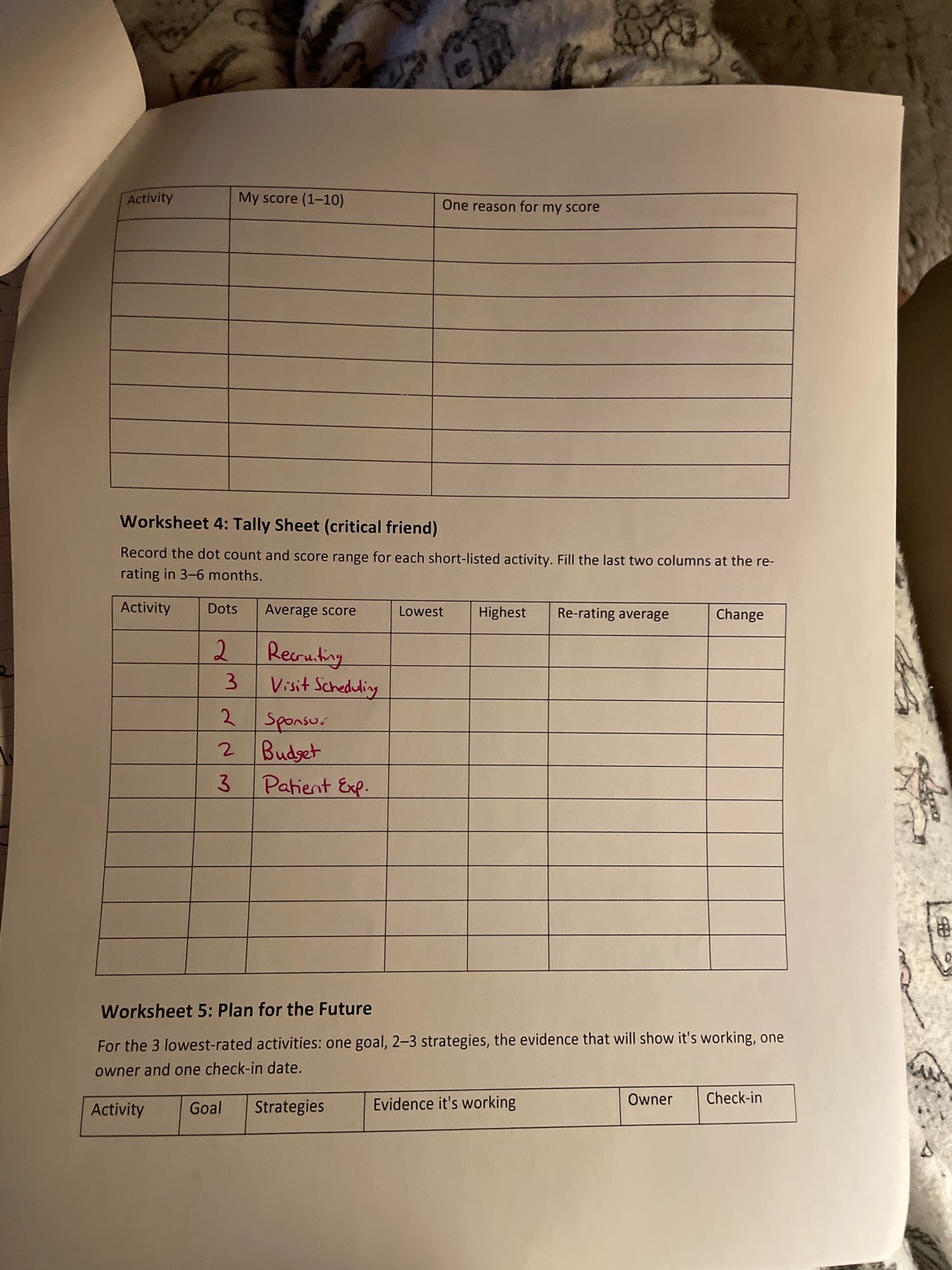
| Area | Donna | Chad | Anne |
|---|---|---|---|
| Recruiting | 1 — No documented, approved Roadmap | 5 — Lack of consolidation | 5 — No clear road map |
| Visit Scheduling & Retention | 6 — I trust this is being done | 8 — No dropouts | 8 — No late visits, no missed |
| Start-up & Feasibility | 1 — Tons of missed tasks | 3 — COMP (+OUD) successes | 2 — Some misses |
| Sponsor Communication | 7 — I think OK | 8 — Always reply quickly | 8 |
| Budgets & Invoicing | 1 — Not done | 8 — Labour costs low | 8 — Never over spend |
| Patient Experience | 7 — I think OK but no evidence | 9 — Patients always happy | 9 |
Where we differ: on Budgets & Invoicing the three raters rated three different meanings of one word — the gap became the agenda.
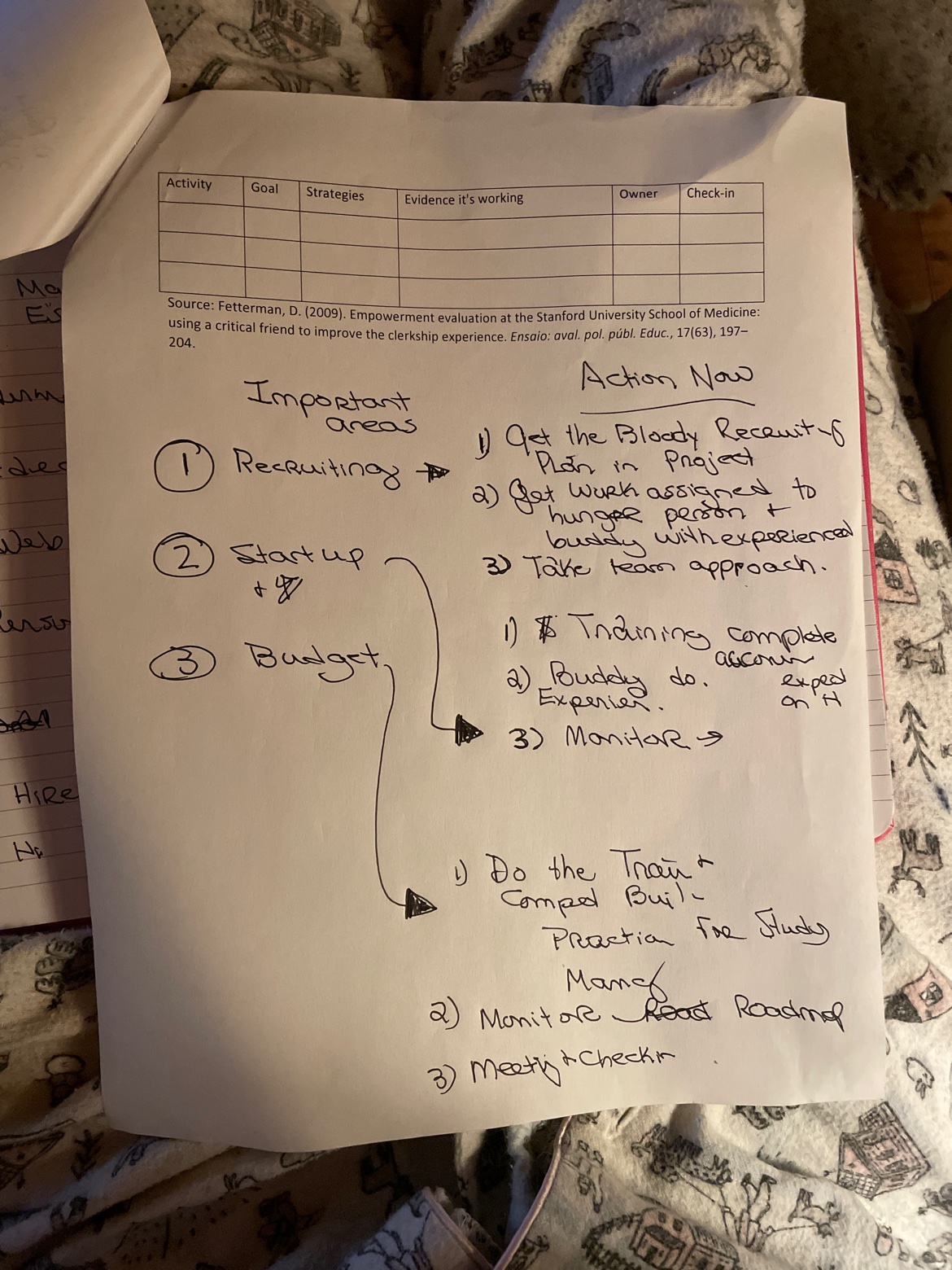
The plan — three action areas
Recruiting
- Get the recruiting plan into the project
- Assign the work to a hungry person
- Buddy with an experienced person
- Team approach
Start-up
- Training complete
- Buddy do — an experienced buddy works alongside
- Monitor
Budget
- Training and competency build — the Study Manager practicum
- Monitor the Roadmap
- Meeting and check-in
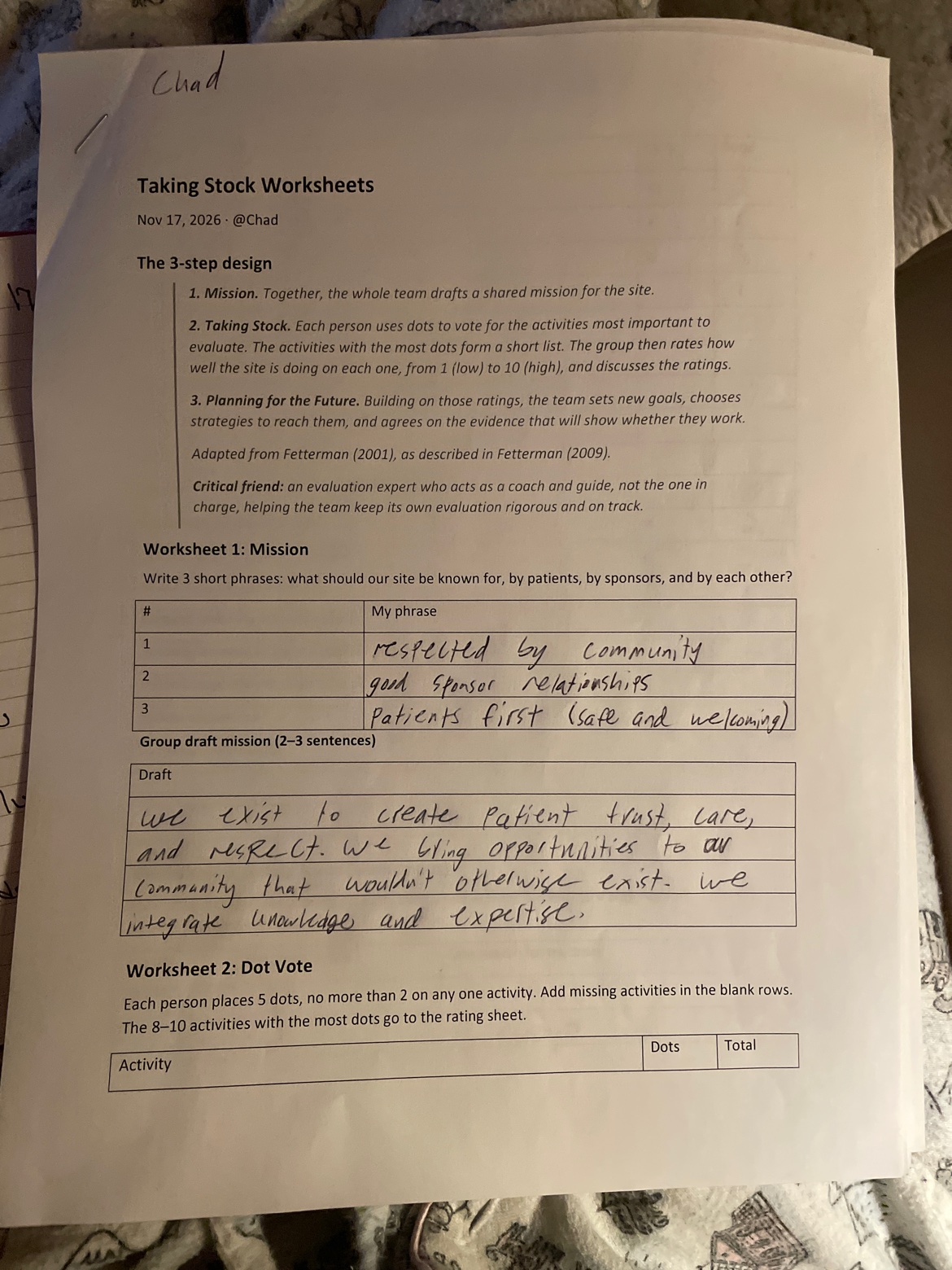
Mission drafts (Nov 17, 2026)
Donna
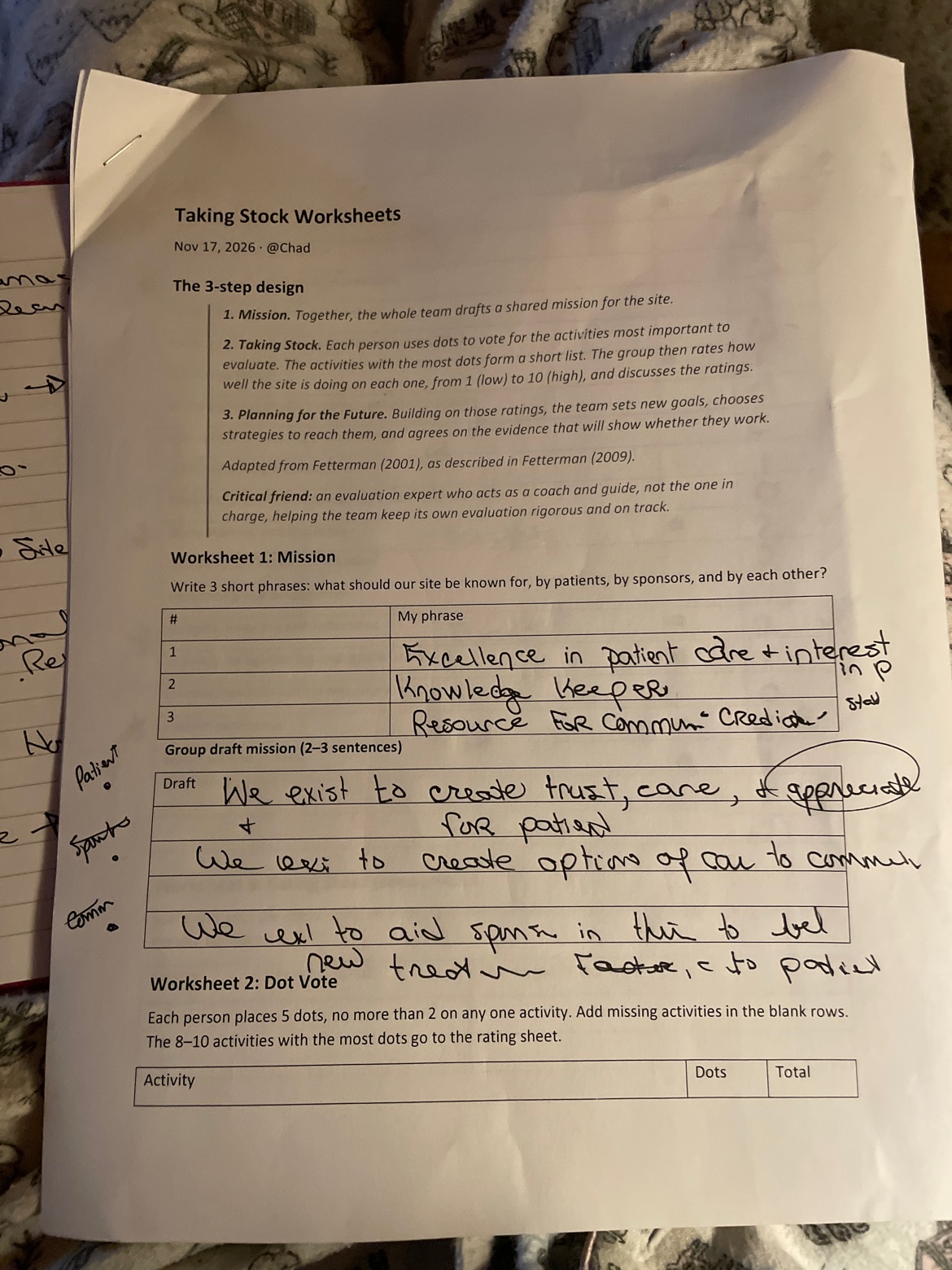
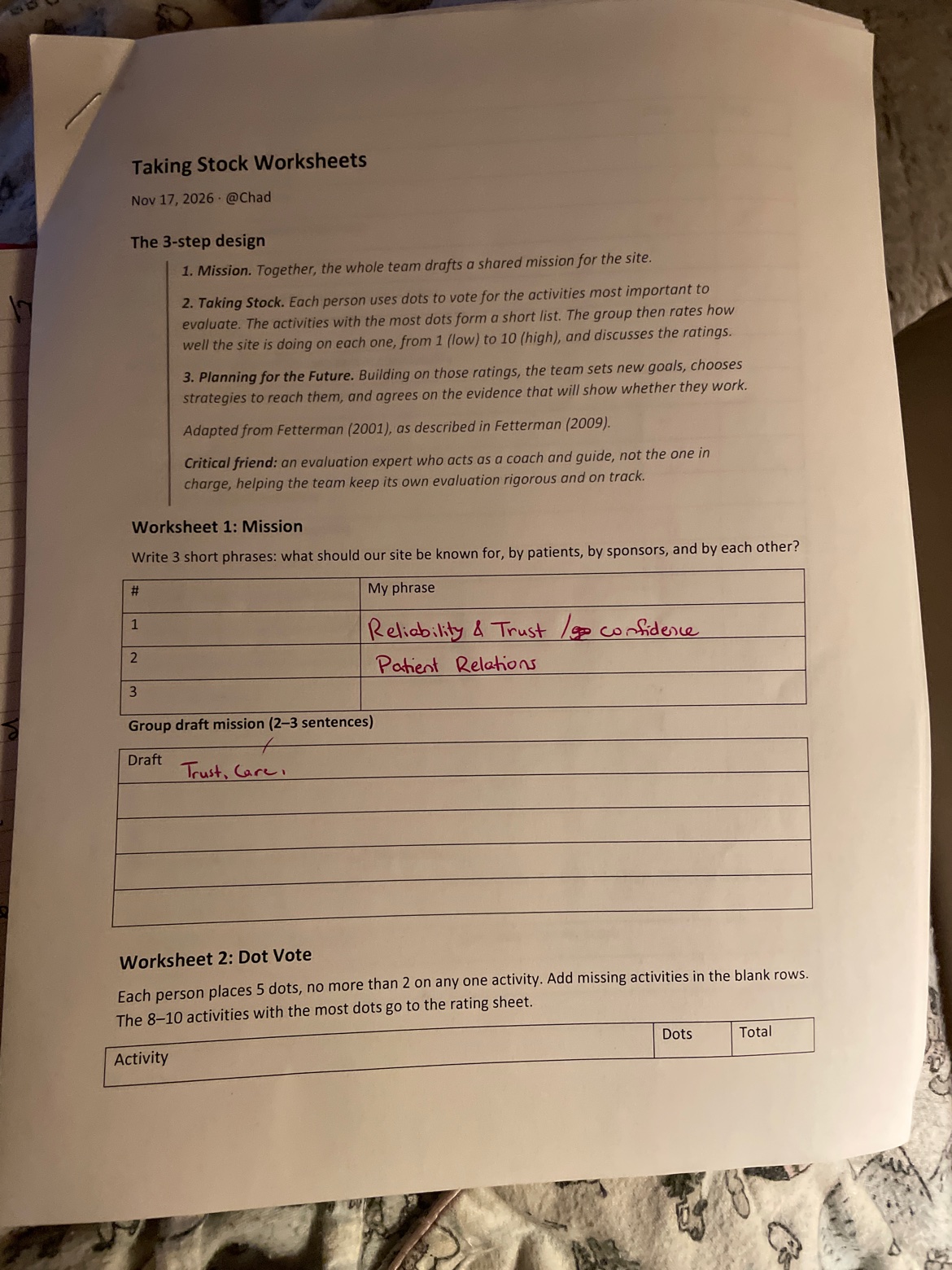
“We exist to create trust, care, and appreciation for patients.”
Excellence in patient care · Knowledge keeper · Resource for community
Chad
“We exist to create patient trust, care, and respect. We bring opportunities to our community that wouldn't otherwise exist. We integrate knowledge and expertise.”
Anne
“We exist to create a welcoming, efficient site patients trust — and a team sponsors can rely on to deliver quality research on time.”
Source Documents — the kickoff meeting
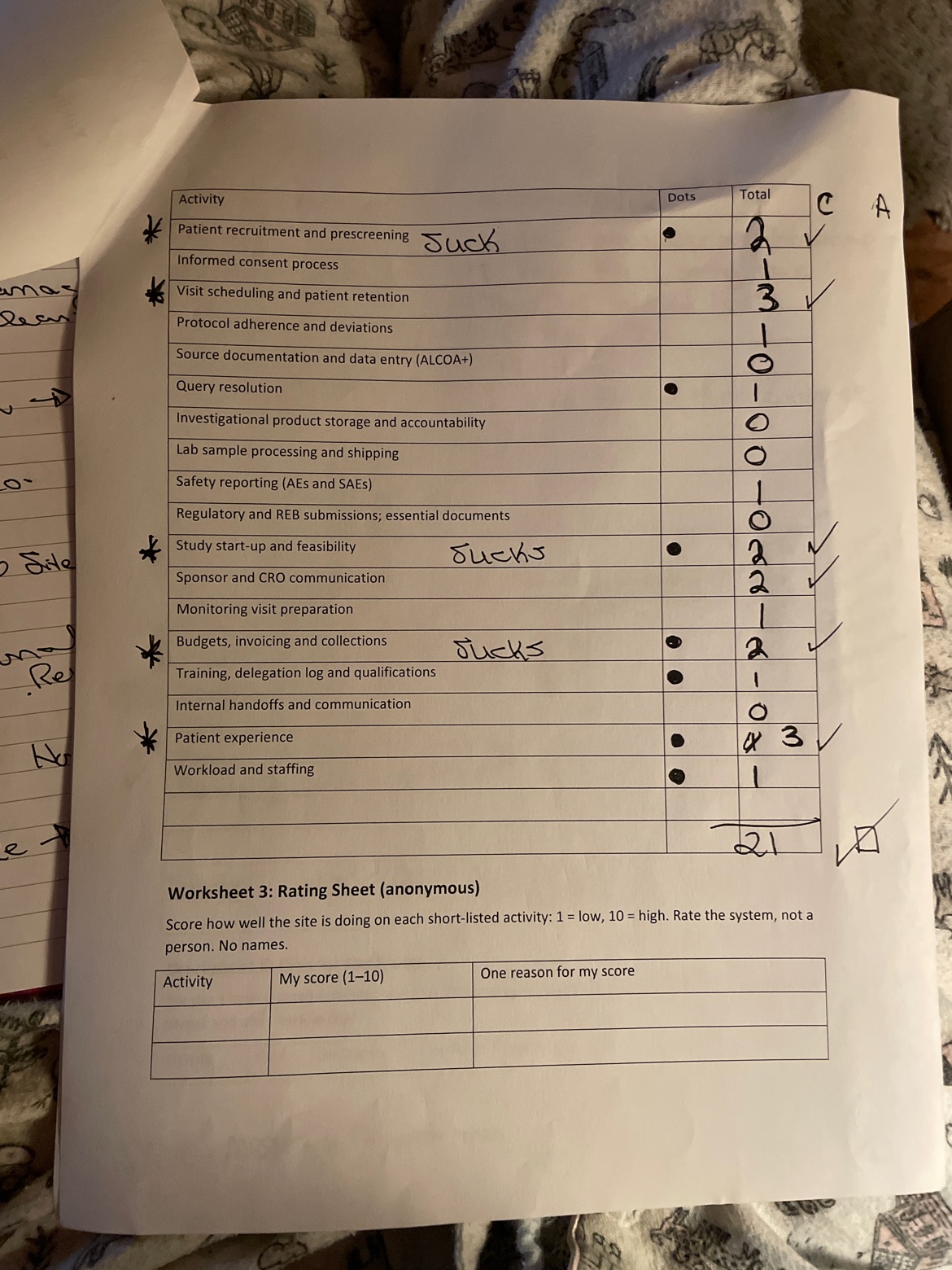
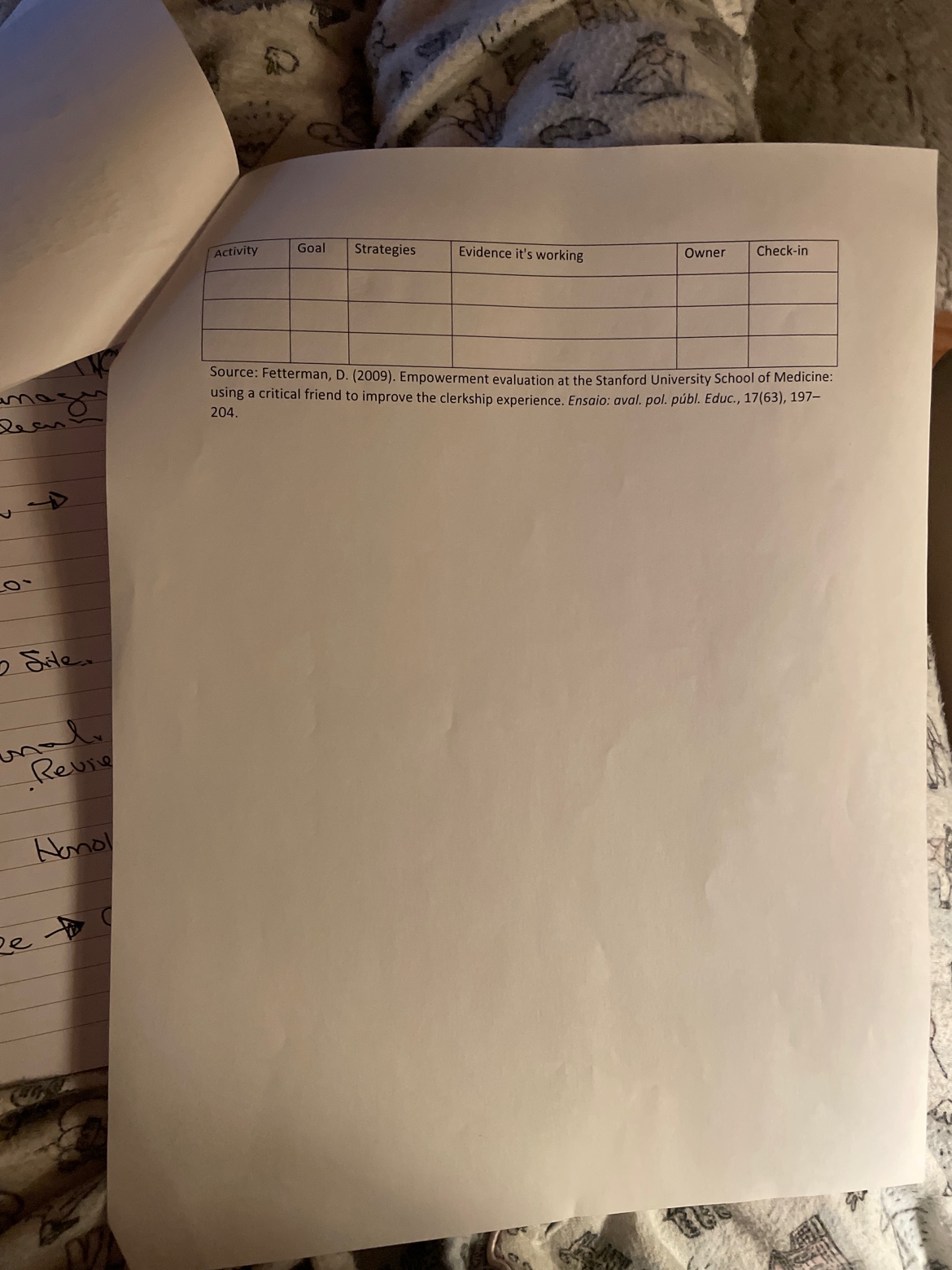
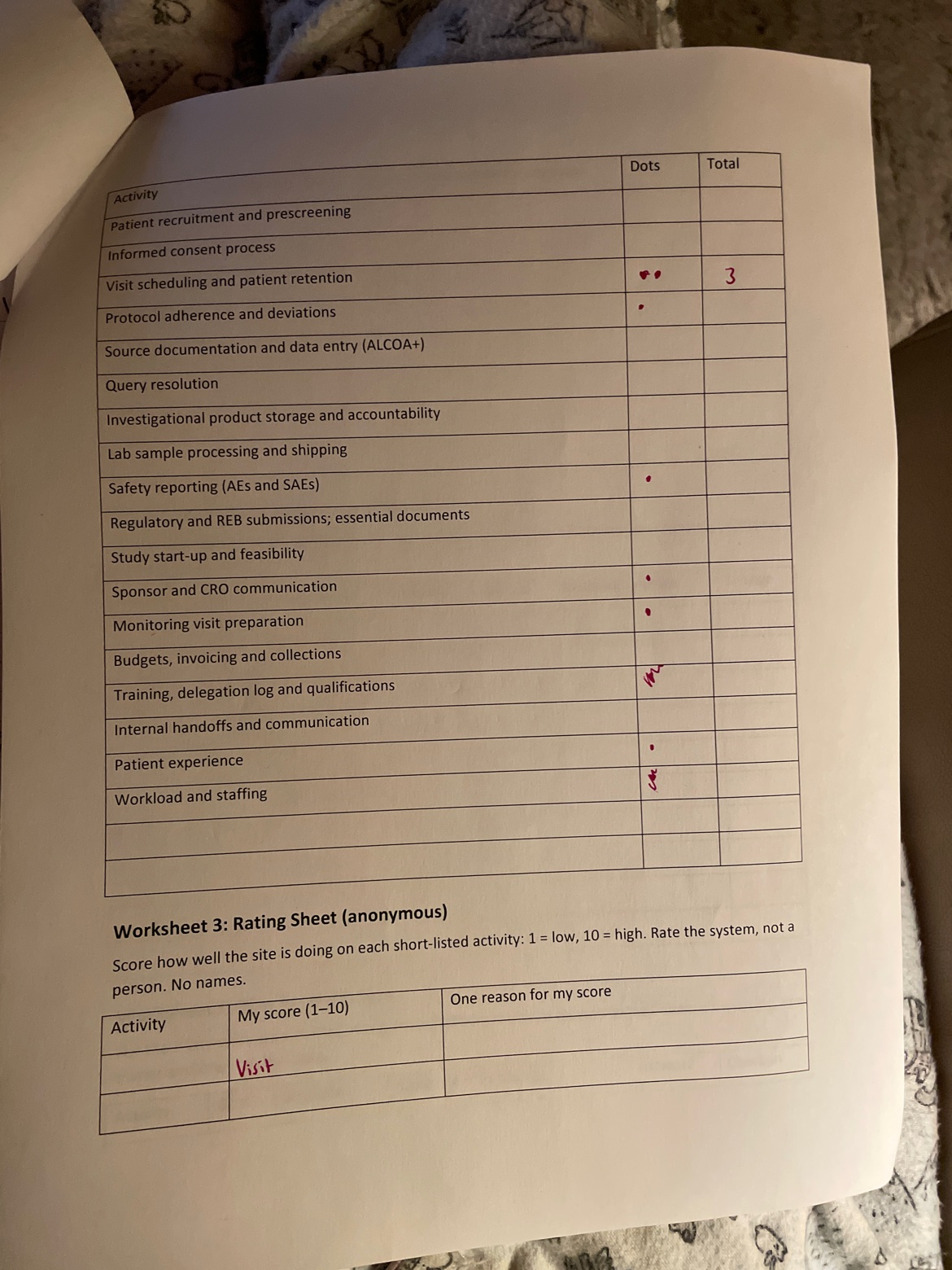
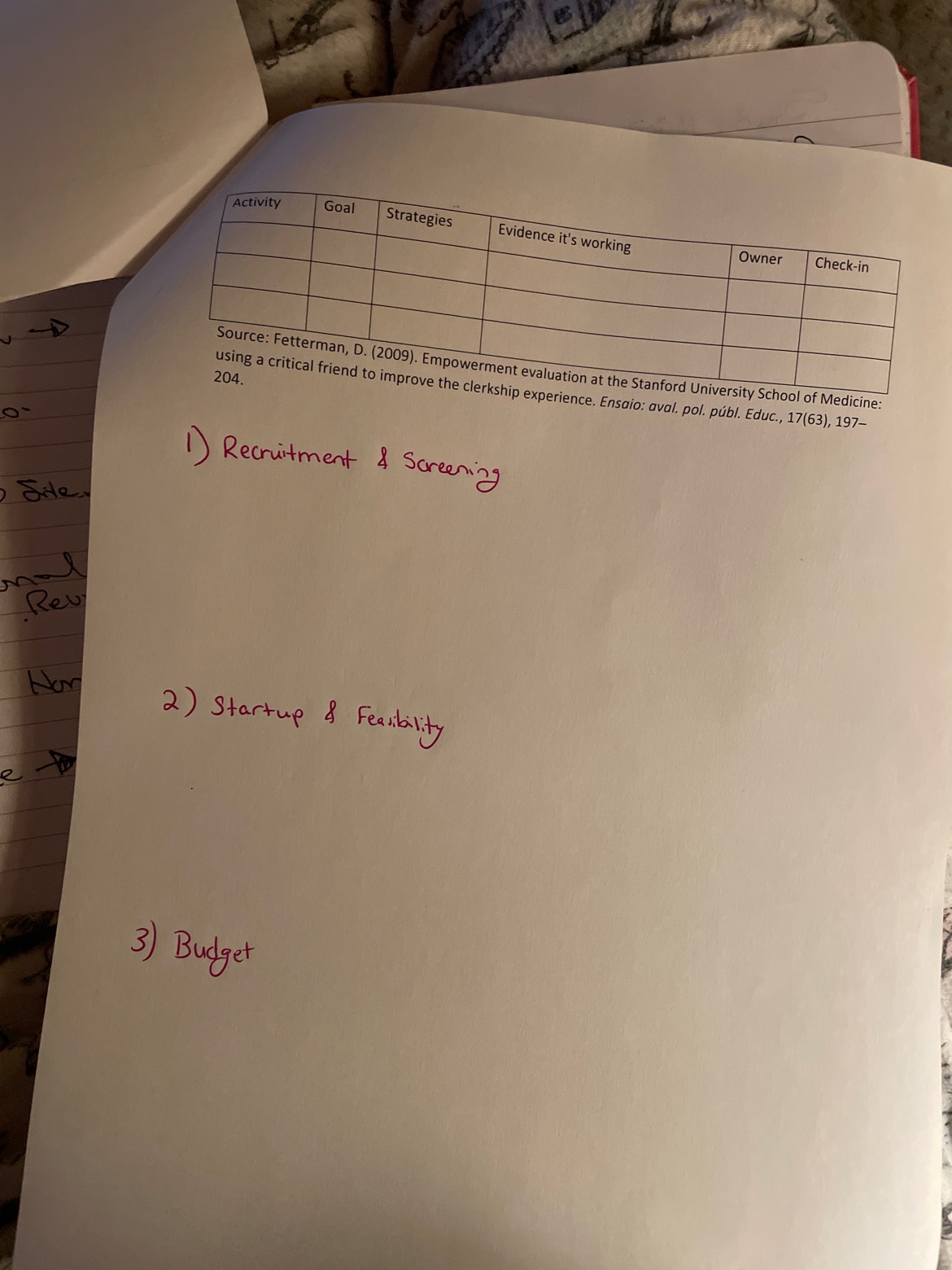
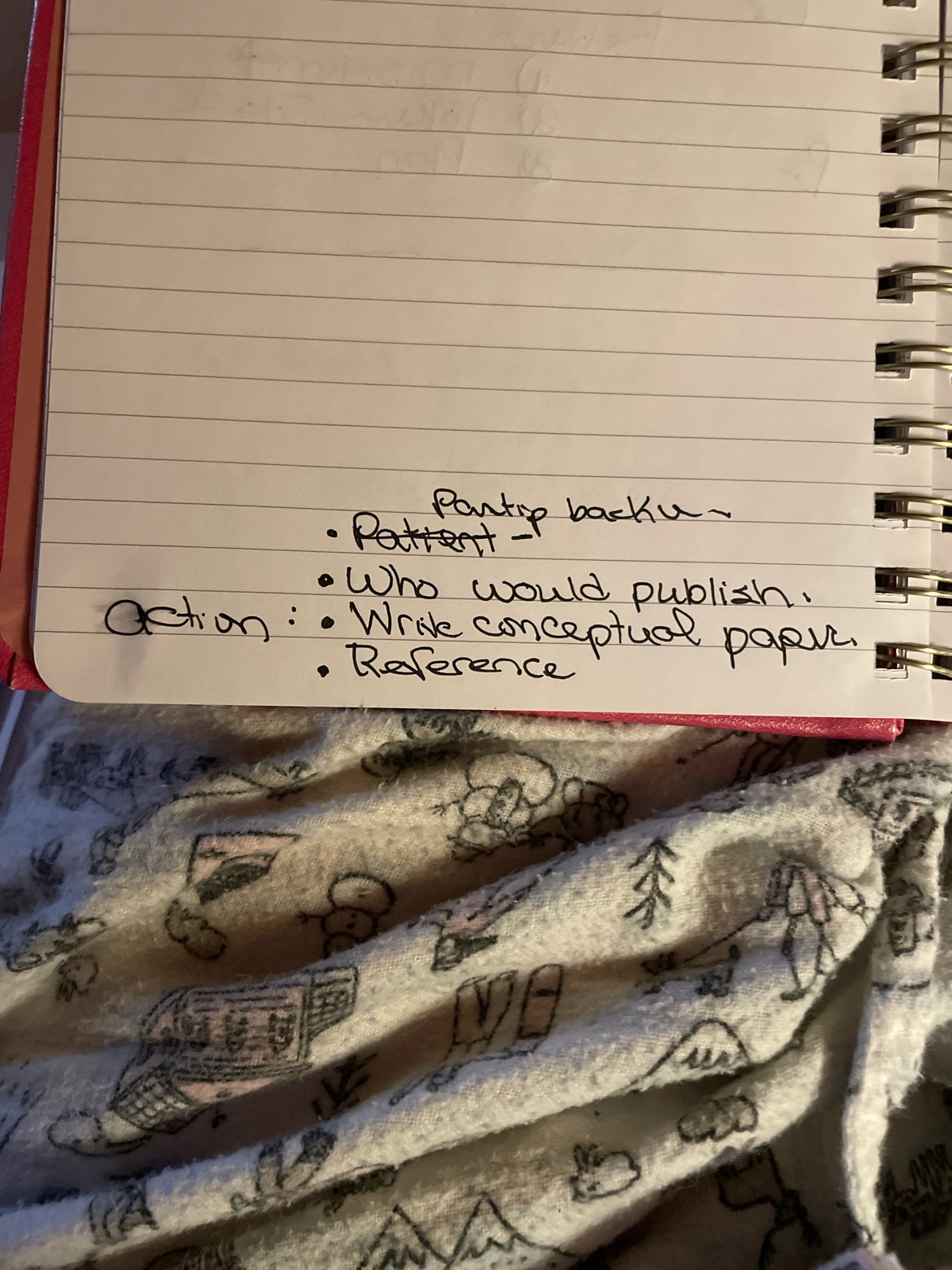
The handwritten Taking Stock worksheets from the kickoff meeting, Nov 17, 2026 — one set per rater (Donna · Chad · Anne). The first place this study's data was recorded.
Literature
The Fetterman paper
Fetterman, D. M., Deitz, J., & Gesundheit, N. (2010). Empowerment evaluation: A collaborative approach to enhancing learning outcomes in the Stanford University School of Medicine. Academic Medicine, 85(5). — The model study this project follows.
Our draft paper
Benson, D., Collyer, C., & Hughes, A. “Young, New, and Leading: Empowerment Evaluation for Study Manager Training in an AI Environment.” Draft, Nov 17, 2026 — in review with the co-authors; for submission to the Journal of Clinical and Translational Science as a Special Communication.
Annotated bibliography
- ACRP (2025), Report on the state of the clinical research workforce — the workforce picture behind the training need.
- Coghlan & Brannick (2014), Doing action research in your own organization — insider action research, our position.
- Fetterman (2001), Foundations of empowerment evaluation — the three steps and ten principles this study runs on.
- Fetterman (2009), Empowerment evaluation at Stanford: using a critical friend, Ensaio 17(63), 197–204 — source of the critical friend role and our worksheets.
- Fetterman, Deitz & Gesundheit (2010), Academic Medicine 85(5) — the model study.
- Fetterman, Kaftarian & Wandersman (Eds.) (1996), Empowerment evaluation: knowledge and tools for self-assessment and accountability.
- Fetterman & Wandersman (Eds.) (2005), Empowerment evaluation principles in practice — the ten principles applied.
- Kemmis, McTaggart & Nixon (2014), The action research planner — plan, act, observe, reflect.
- Patton (2015), Qualitative research & evaluation methods — the qualitative methods backbone.
- Reason & Bradbury (Eds.) (2008), The SAGE handbook of action research.
- Journal of Clinical and Translational Science (2025), “Reimagining entryways” (CTSA work-based learning) — the conversation our paper joins.
- Sinsky et al. (2016), Annals of Internal Medicine 165(11), 753–760 — the administrative-burden evidence: nearly two hours of desk work per hour with patients.
- Sonstein et al. (2014), Moving from compliance to competency — the core competency framework for clinical research professionals.
- Stoecker (2013), Research methods for community change (2nd ed.) — with Benson, the source of the 12 Steps of a PAR.
- Stringer (2014), Action research (4th ed.) — look, think, act.
- Wandersman et al. (2005), The principles of empowerment evaluation — the ten principles stated plainly.
- Scriven, M. (1997), Empowerment evaluation examined, Evaluation Practice 18(2), 165–175 — the famous critique the field had to answer.
- Patton, M. Q. (1997), Toward distinguishing empowerment evaluation and placing it in a larger context, Evaluation Practice 18(2), 147–163 — the companion critique.
- Fetterman, D. M. (1997), Empowerment evaluation: A response to Patton and Scriven, Evaluation Practice 18(3), 253–266 — Fetterman's reply.
- Patton, M. Q. (2005), Toward distinguishing empowerment evaluation and placing it in a larger context: Take two, American Journal of Evaluation 26(3), 408–414 — the debate resumes around the principles book.
- Fetterman, D. M. (2005), In response to Drs. Patton and Scriven, American Journal of Evaluation 26(3), 418–420 — the principles defended.
The Ten Principles of Empowerment Evaluation
- Improvement
- Community ownership
- Inclusion
- Democratic participation
- Social justice
- Community knowledge
- Evidence-based strategies
- Capacity building
- Organizational learning
- Accountability
Stated as a set in Fetterman & Wandersman (2005), in part as the approach's answer to its critics.
NP-Fetterman Study Manager Study
An empowerment evaluation of the new Study Manager Training curriculum in an emerging AI environment.
Donna Benson (lead) · Chad Collyer · Anne Hughes
Research question: What impact could an Empowerment Evaluation approach have on development of a new Study Manager Training quality curriculum in an emerging AI environment?
The baseline — Taking Stock, Nov 17, 2026
| Area | Donna | Chad | Anne |
|---|---|---|---|
| Recruiting | 1 — No documented, approved Roadmap | 5 — Lack of consolidation | 5 — No clear road map |
| Visit Scheduling & Retention | 6 — I trust this is being done | 8 — No dropouts | 8 — No late visits, no missed |
| Start-up & Feasibility | 1 — Tons of missed tasks | 3 — COMP (+OUD) successes | 2 — Some misses |
| Sponsor Communication | 7 — I think OK | 8 — Always reply quickly | 8 |
| Budgets & Invoicing | 1 — Not done | 8 — Labour costs low | 8 — Never over spend |
| Patient Experience | 7 — I think OK but no evidence | 9 — Patients always happy | 9 |
Where we differ: on Budgets & Invoicing the three raters rated three different meanings of one word — the gap became the agenda.
The plan — three action areas
Recruiting
- Get the recruiting plan into the project
- Assign the work to a hungry person
- Buddy with an experienced person
- Team approach
Start-up
- Training complete
- Buddy do — an experienced buddy works alongside
- Monitor
Budget
- Training and competency build — the Study Manager practicum
- Monitor the Roadmap
- Meeting and check-in
Mission drafts (Nov 17, 2026)
Donna
“We exist to create trust, care, and appreciation for patients.”
Excellence in patient care · Knowledge keeper · Resource for community
Chad
“We exist to create patient trust, care, and respect. We bring opportunities to our community that wouldn't otherwise exist. We integrate knowledge and expertise.”
Anne
“We exist to create a welcoming, efficient site patients trust — and a team sponsors can rely on to deliver quality research on time.”
Source Documents — the kickoff meeting
The handwritten Taking Stock worksheets from the kickoff meeting, Nov 17, 2026 — one set per rater (Donna · Chad · Anne). The first place this study's data was recorded.
Literature
The Fetterman paper
Fetterman, D. M., Deitz, J., & Gesundheit, N. (2010). Empowerment evaluation: A collaborative approach to enhancing learning outcomes in the Stanford University School of Medicine. Academic Medicine, 85(5). — The model study this project follows.
Our draft paper
Benson, D., Collyer, C., & Hughes, A. “Young, New, and Leading: Empowerment Evaluation for Study Manager Training in an AI Environment.” Draft, Nov 17, 2026 — in review with the co-authors; for submission to the Journal of Clinical and Translational Science as a Special Communication.
Annotated bibliography
- ACRP (2025), Report on the state of the clinical research workforce — the workforce picture behind the training need.
- Coghlan & Brannick (2014), Doing action research in your own organization — insider action research, our position.
- Fetterman (2001), Foundations of empowerment evaluation — the three steps and ten principles this study runs on.
- Fetterman (2009), Empowerment evaluation at Stanford: using a critical friend, Ensaio 17(63), 197–204 — source of the critical friend role and our worksheets.
- Fetterman, Deitz & Gesundheit (2010), Academic Medicine 85(5) — the model study.
- Fetterman, Kaftarian & Wandersman (Eds.) (1996), Empowerment evaluation: knowledge and tools for self-assessment and accountability.
- Fetterman & Wandersman (Eds.) (2005), Empowerment evaluation principles in practice — the ten principles applied.
- Kemmis, McTaggart & Nixon (2014), The action research planner — plan, act, observe, reflect.
- Patton (2015), Qualitative research & evaluation methods — the qualitative methods backbone.
- Reason & Bradbury (Eds.) (2008), The SAGE handbook of action research.
- Journal of Clinical and Translational Science (2025), “Reimagining entryways” (CTSA work-based learning) — the conversation our paper joins.
- Sinsky et al. (2016), Annals of Internal Medicine 165(11), 753–760 — the administrative-burden evidence: nearly two hours of desk work per hour with patients.
- Sonstein et al. (2014), Moving from compliance to competency — the core competency framework for clinical research professionals.
- Stoecker (2013), Research methods for community change (2nd ed.) — with Benson, the source of the 12 Steps of a PAR.
- Stringer (2014), Action research (4th ed.) — look, think, act.
- Wandersman et al. (2005), The principles of empowerment evaluation — the ten principles stated plainly.
- Scriven, M. (1997), Empowerment evaluation examined, Evaluation Practice 18(2), 165–175 — the famous critique the field had to answer.
- Patton, M. Q. (1997), Toward distinguishing empowerment evaluation and placing it in a larger context, Evaluation Practice 18(2), 147–163 — the companion critique.
- Fetterman, D. M. (1997), Empowerment evaluation: A response to Patton and Scriven, Evaluation Practice 18(3), 253–266 — Fetterman's reply.
- Patton, M. Q. (2005), Toward distinguishing empowerment evaluation and placing it in a larger context: Take two, American Journal of Evaluation 26(3), 408–414 — the debate resumes around the principles book.
- Fetterman, D. M. (2005), In response to Drs. Patton and Scriven, American Journal of Evaluation 26(3), 418–420 — the principles defended.
The Ten Principles of Empowerment Evaluation
- Improvement
- Community ownership
- Inclusion
- Democratic participation
- Social justice
- Community knowledge
- Evidence-based strategies
- Capacity building
- Organizational learning
- Accountability
Stated as a set in Fetterman & Wandersman (2005), in part as the approach's answer to its critics.